Why "A Matter of Salone" Signals the End of the White-Box Villa Interior
For readers assessing luxury Italian interior design, the practical question is how the idea performs in a real room, not only how it photographs. Salone del Mobile.Milano ran from 21 to 26 April 2026 at Fiera Milano Rho and closed with 316,342 visitors from 167 countries, up 4.5 percent on 2025. The theme was "A Matter of Salone," and the edition was built on matter rather than surface: the campaign ran on stone as origin, petal as sensuality, wood as function, sponge as reinvention. Underneath the poster sat an instruction: begin with the material, not the picture of the finished object. It ends a style that has governed villa interiors for fifteen years.
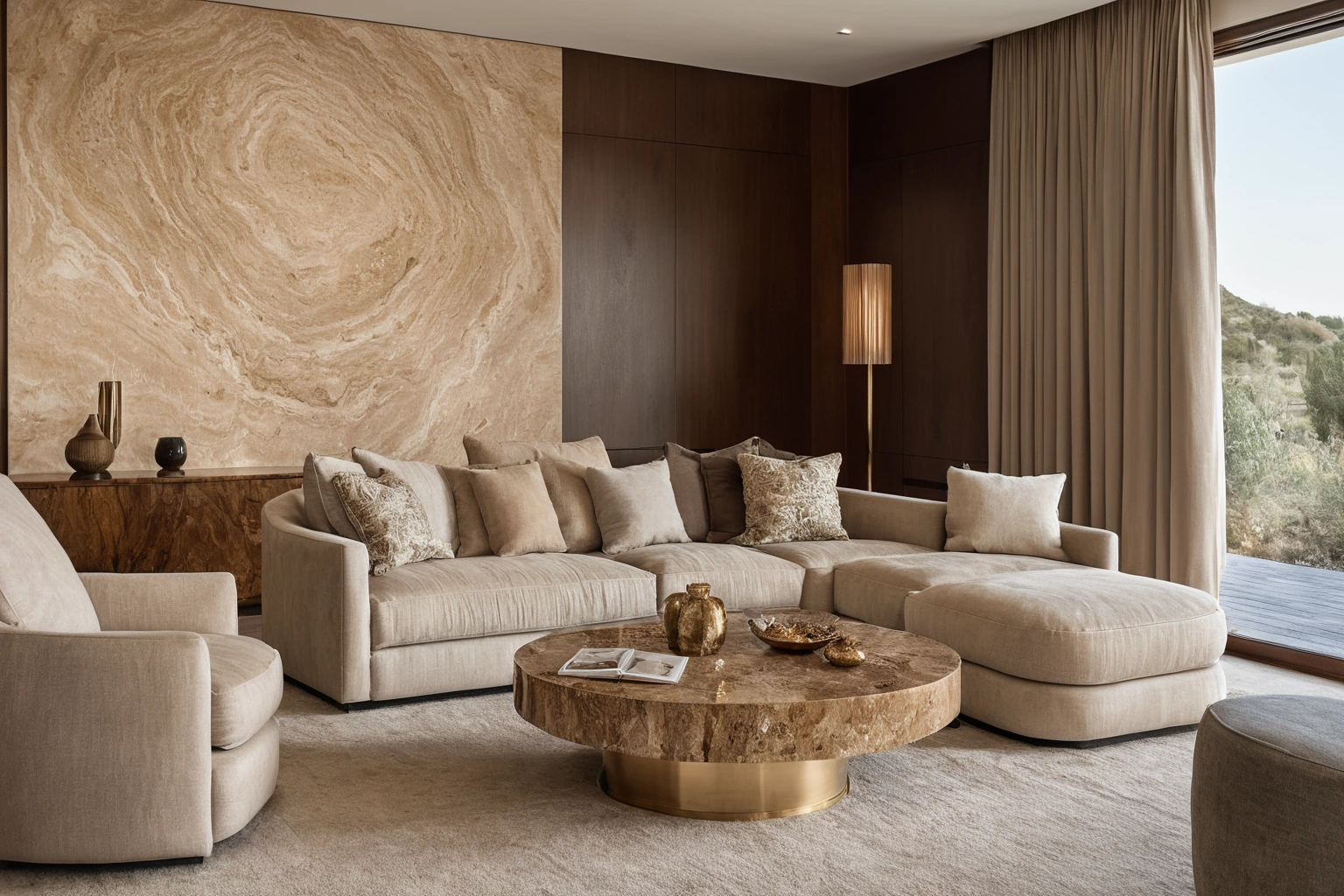
The white box was a gallery idea before it was a villa idea
The all-white interior did not come from housing. It came from exhibiting. The white cube gallery is a square or rectangular room with unadorned white walls and its light in the ceiling. It emerged in the early twentieth century as Bauhaus and de Stijl work demanded white walls to be read against; Whistler's 1883 London exhibition is often cited as perhaps the first white cube show. The room was engineered to disappear so the object in it could be looked at. By 1976 the idea was already being taken apart: Brian O'Doherty's three Artforum essays, collected as Inside the White Cube: The Ideology of the Gallery Space, argued the neutrality was an illusion.
The villa borrowed the grammar without the brief. A gallery has no cooking, no six metres of west glazing, no children, no dust, no thirty-year horizon. Put the same walls in a house and the room does not disappear. It becomes the most demanding object in it.
What it costs to keep a room white
The clearest evidence sits in the drywall standard, which has no opinion about taste. GA-214, the Gypsum Association's levels of finish, treats Level 4 as the normal smooth-wall grade for flat paint and does not recommend it where non-flat or deep-tone paints are used. Level 5 is specified where smooth walls take glossy finishes, dark tones, or where critical lighting conditions occur. It adds a skim coat over the entire surface to minimise joint photographing and fasteners showing through. A related practical reference is available in Material Selection.
The standard names the white box's failure, joint photographing, the wall telling you where it was assembled, and names the cause: critical lighting, a low sun raking along a long plane. That is not an edge case in a villa. It is what tall glazing does to its own walls twice a day. So the substrate's honesty counts as a defect, and every decision the style produces is defensive. Skim the wall. Keep raking light off it. Keep furniture away. Repaint. A mark on a white plane is not a stage in the wall's life. It is damage.
| Surface | First visible change | Reads as | Repair path |
|---|---|---|---|
| Plasterboard, flat white paint | Scuffs; joints showing under raking light | Damage | Repaint the whole plane |
| High-gloss white lacquer | Micro-scratches, dulling | Damage | Strip and respray off site |
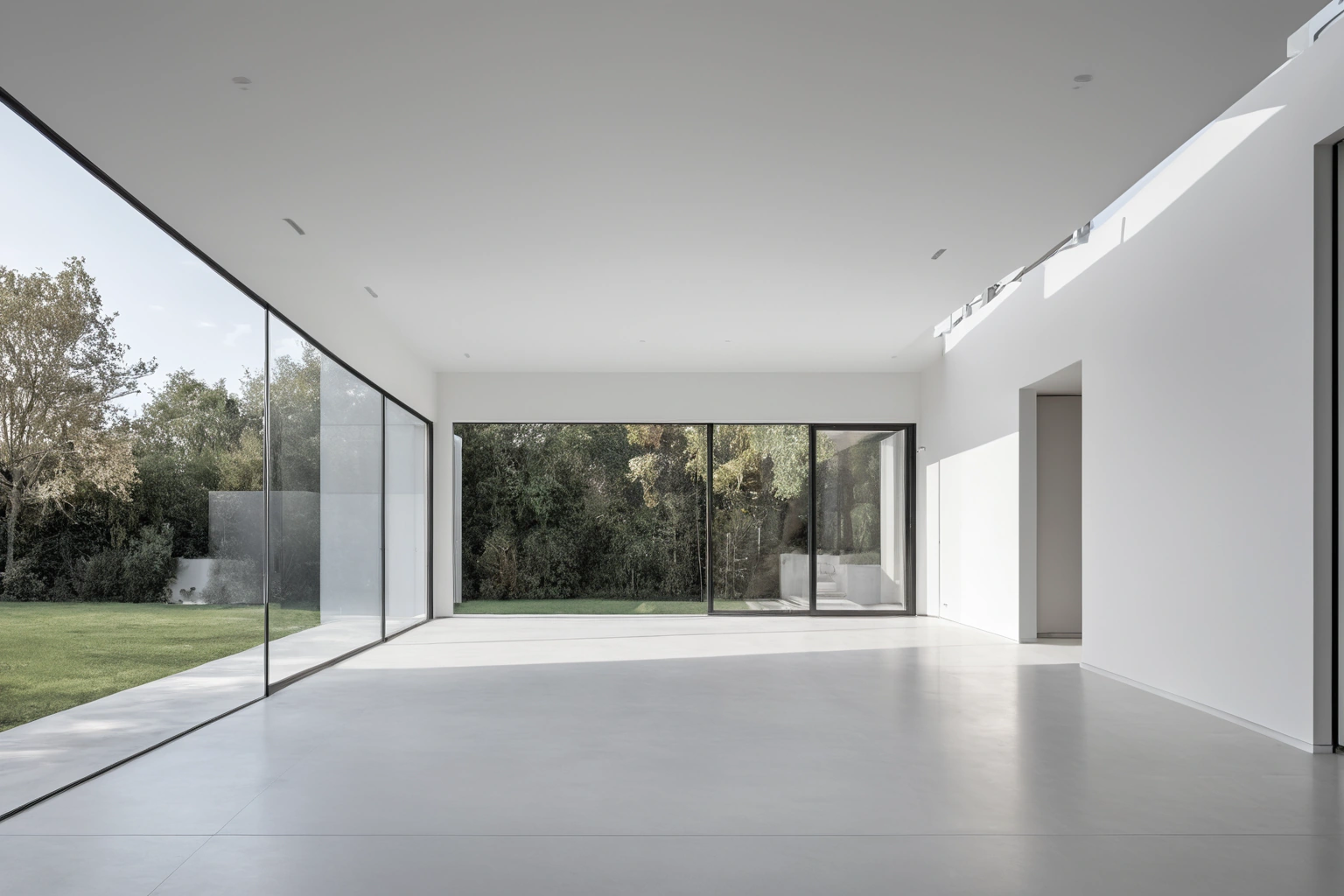
| Honed travertine | Pores open, arrises soften | Age | Re-hone in place |
| Solid timber, burl veneer | Colour deepens, grain lifts | Age | Oil or wax, in place |
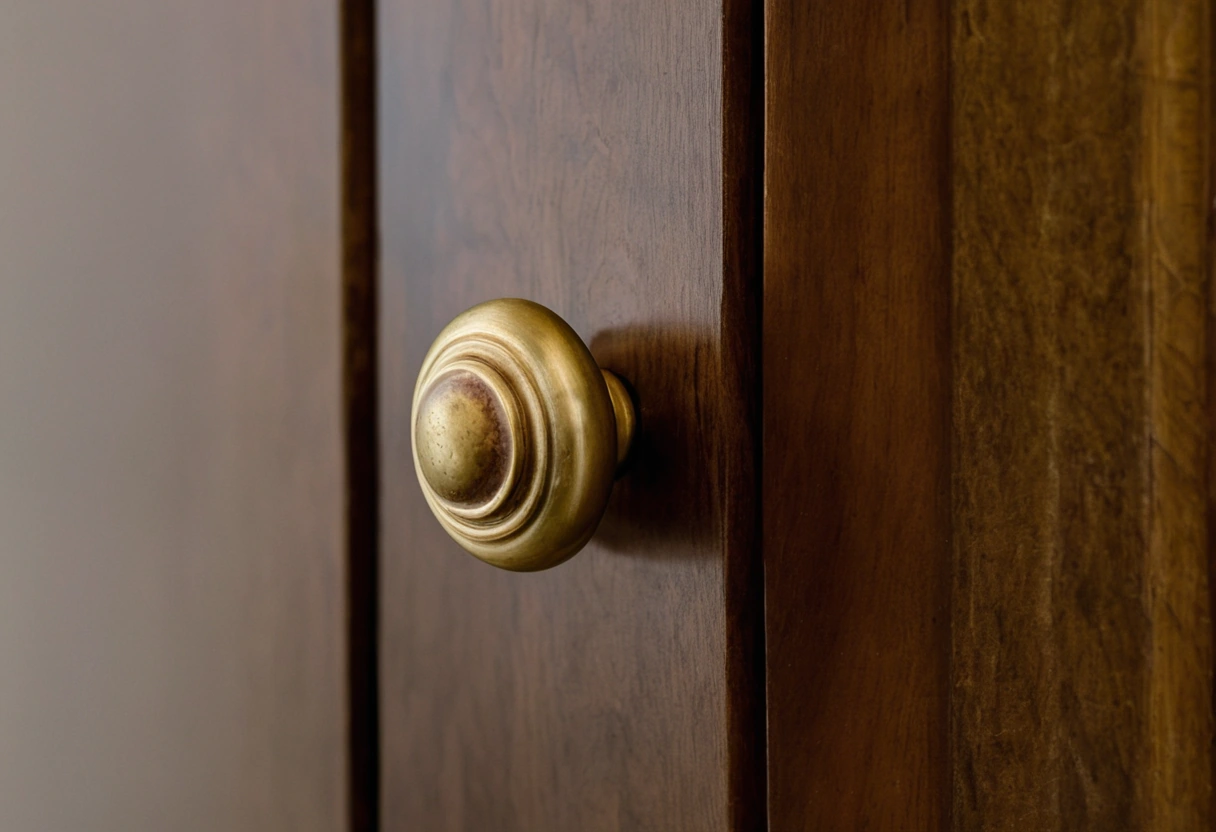
| Unlacquered brass, bronze | Darkens where hands land | Age | Leave it, or polish back |
| Linen, wool, mohair | Weave relaxes, hand softens | Age | Clean and keep using |
What "materiality over image" changes in a specification
The slogan is easy to reduce to a mood board. On a real schedule it changes specific lines, and each one is a decision about time. This decision can also be compared with the site's guide to Wall Finishes.
Patina is the layer age and exposure build on copper, brass, bronze, stone, timber and leather. It is not dirt: it can protect the material under it from the corrosion that would otherwise take it, and a lacquer stops it forming. So lacquered against unlacquered brass is not a finish preference. It decides whether the metal keeps working, or is frozen at day one with every later day a departure from its best condition.
Travertine makes the same argument in stone. It is a freshwater limestone precipitated at spring mouths, with porosity running from roughly 10 to 70 percent. Those pores can be filled and the slab polished, or left open and honed. The Colosseum is the largest travertine building in the world; it does not read as a filled mirror. A filled, polished slab is an image of stone. An open, honed slab is stone, and it can be re-honed on site in its twentieth year. Further examples and planning context appear in Luxury Finishes.
Burl settles the labour question. It is an abnormal growth on a trunk or root, hyperplasia of xylem produced by the vascular cambium after stress or injury. The grain is twisted and interlocked, dense, hard to split, and it chips unpredictably under a tool. Nobody specifies burl to save time. It buys hours of skilled work and a slab that cannot be repeated.
A white box is finished on handover day, and every day after is subtraction. A material room is unfinished on handover day, and that is the point of it.
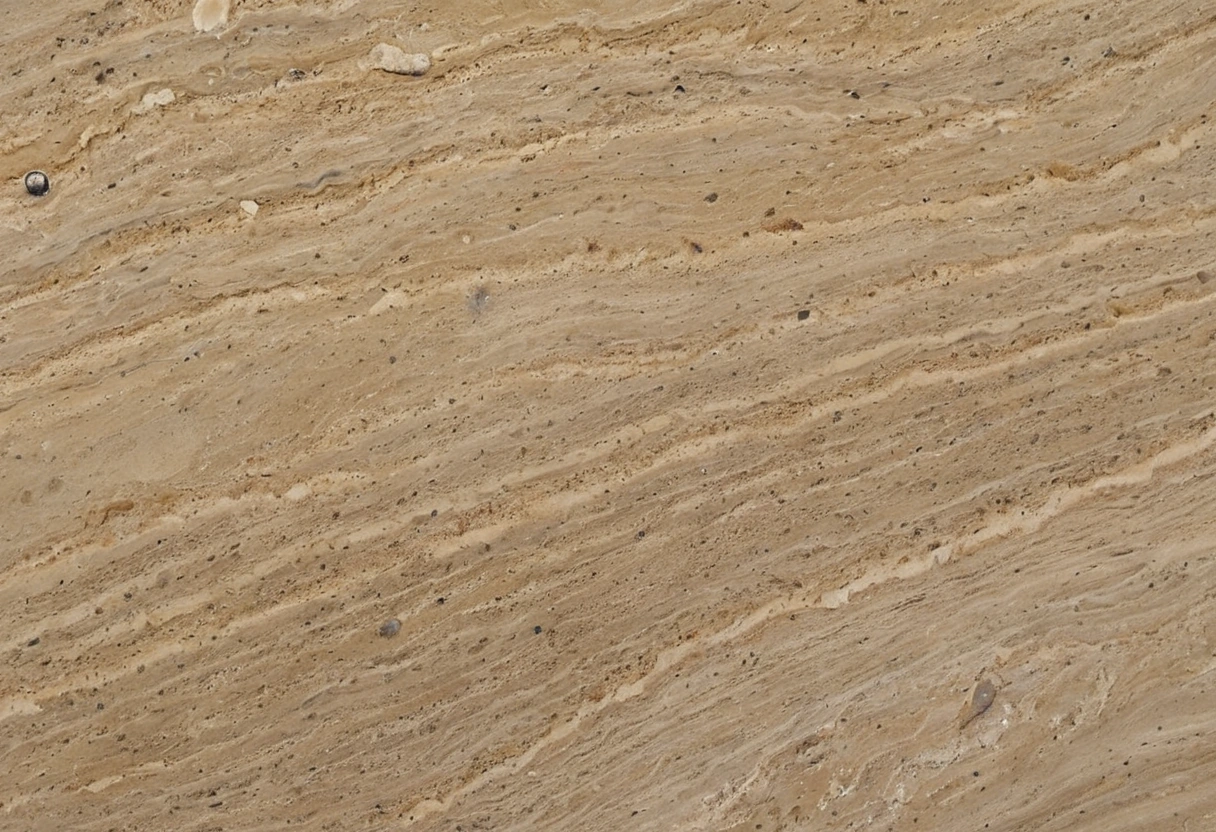
Specifying for the second decade
Once the brief stops being a photograph, the questions change. These decide whether a room is worth living in at year fifteen. For the next stage of the brief, see Villa Interiors.
- Say in writing which surfaces may change. A schedule silent on this is read as "nothing changes," and the first honest mark on a bronze handle becomes a defect report.
- Buy the substrate, not the coat. Timber, stone and solid metal can be worked back. A coating over a cheap core has one life, and it is the coating's.
- Prefer finishes repairable in place. Re-honing travertine and waxing bronze are site jobs. Respraying lacquer means the piece leaves the house.
- Test with light, not with a render. Walk every long plane with a lamp at a grazing angle before sign-off. The villa supplies that condition free, every afternoon.
- Ask what the room looks like in 2040. A workshop building bespoke villa interiors should name which surfaces darken, which soften, which get re-cut.
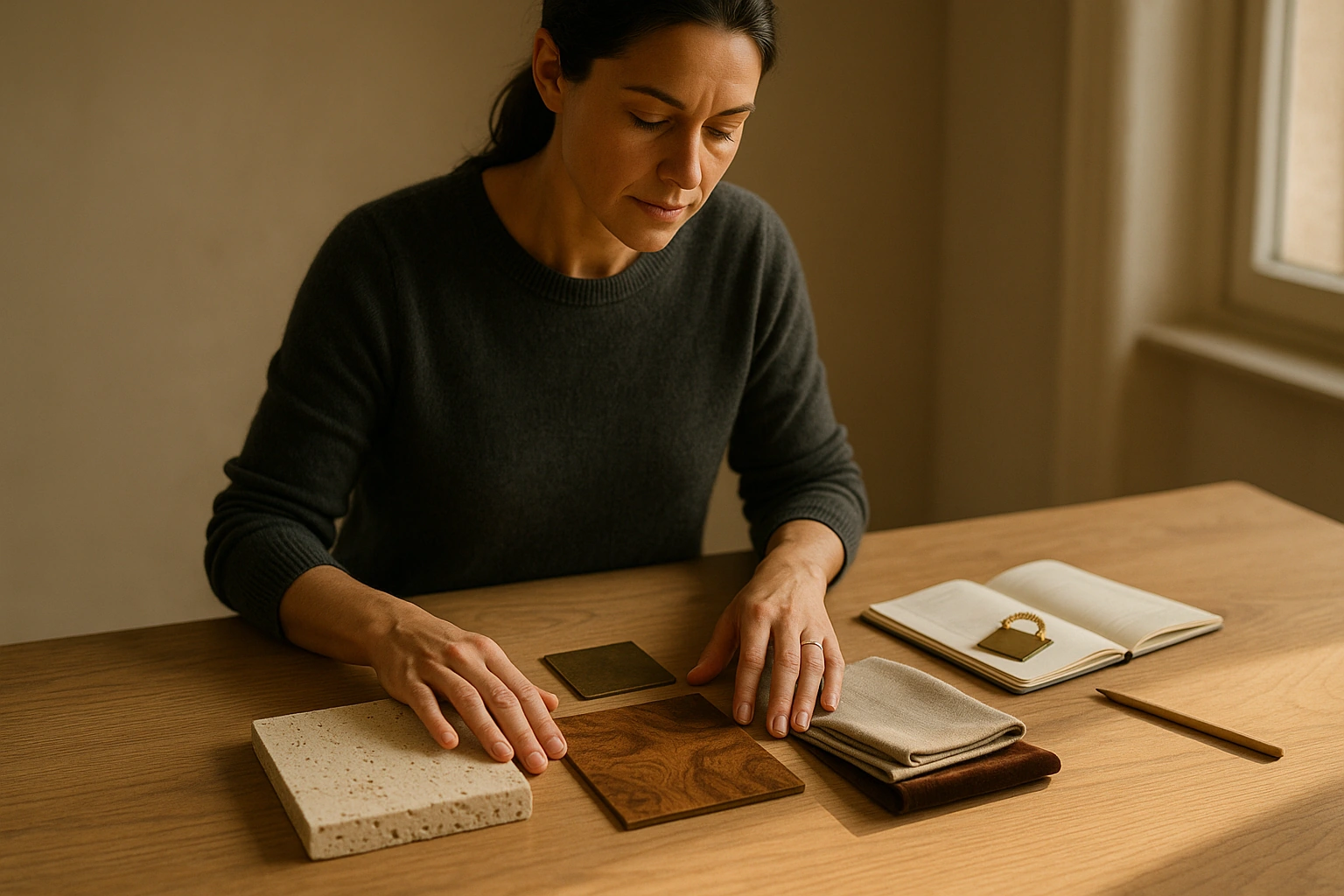
The vocabulary worth having before you commission
- Joint photographing
- A taped joint showing through paint under raking light; why GA-214 adds a skim coat at Level 5.
- Critical lighting
- Light striking a surface at a shallow angle, exaggerating every deviation in the plane.
- Honed
- Stone ground flat and left matte rather than polished; re-honeable in place.
- Living finish
- Metal supplied without a coating, on the understanding it will change with handling, and that this is not a defect.
- Burl
- Timber from an abnormal trunk or root growth: wild interlocked grain, dense, slow to work, different in every slab.
What replaces it is not more decoration
The turn away from the white box gets misread as a licence to add things. It is closer to the opposite. The 2026 material vocabulary is short: travertine, burl, suede, slubby linen, velvet, mohair, unlacquered metals. None of it needs pattern, because the interest is in the material and in what a low sun does to it. A room built from those is as quiet as any white box, and holds more attention.
The white box was never really a style. It was a photographic convention that escaped a gallery and got built at 1:1 in houses that were not galleries, on a promise it could not keep: that a room could be finished and stay finished. Salone's 2026 theme withdraws the promise. Start with the matter, and specify the room so that looking different in 2040 is the reason to keep it rather than the reason to gut it.